特邀嘉賓
Keynote1
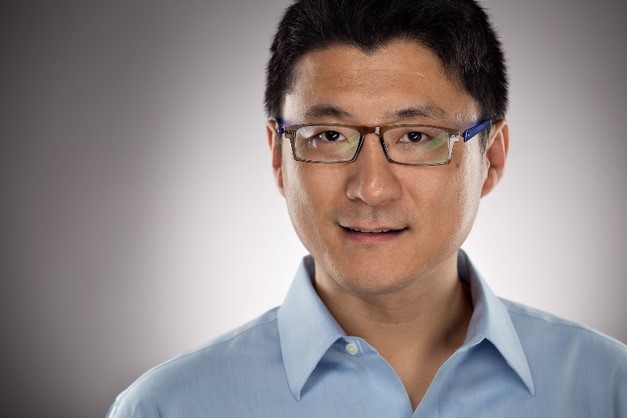
Junfeng Yang is Professor of Computer Science, Member of the Data Science Institute, and co-Director of the Software Systems Lab at Columbia University. Yang’s research centers on building reliable, secure, and fast software systems. Today’s software systems are large, complex, and plagued with errors, some of which have caused critical system failures, breaches, and performance degradation. Yang has invented techniques, algorithms, and tools to analyze, test, debug, monitor, and optimize real-world software, including Android, Linux, production systems at Microsoft, machine learning systems, and self-driving platforms, benefiting hundreds of millions of users. His research has resulted in numerous vulnerability patches to real-world systems, practical adoption at the largest technology companies, and press coverage at Scientific American, The Atlantic, The Register, Communications of ACM, and other news outlets. Yang received BS in Computer Science from Tsinghua University and MS and PhD in Computer Science from Stanford University. He won the Sloan Research Fellowship and the Air Force Office of Scientific Research Young Investigator Program Award, both in 2012; the National Science Foundation CAREER award in 2011; the inaugural Rock Star Award of the Association of Chinese Scholars in Computing in 2019; and Best Paper Awards at the USENIX Symposium on Operating System Design and Implementation in 2004, the ACM Symposium on Operating Systems Principles in 2017, and the USENIX Annual Technical Conference in 2021.
報(bào)告題目:Debugging Performance Issues in Modern Desktop Applications
摘要: Modern desktop applications involve many asynchronous, concurrent interactions that make performance issues difficult to diagnose. Although prior work has used causal tracing for debugging performance issues in distributed systems, we find that these techniques suffer from high inaccuracies for desktop applications. In this talk, I will present Argus, a fast, effective causal tracing tool for debugging performance anomalies in desktop applications. Argus introduces a novel notion of strong and weak edges to explicitly model and annotate trace graph ambiguities, a new beam-search-based diagnosis algorithm to select the most likely causal paths in the presence of ambiguities, and a new way to compare causal paths across normal and abnormal executions. We have implemented Argus across multiple versions of macOS and evaluated it on 12 infamous spinning pinwheel issues in popular macOS applications. Argus diagnosed the root causes for all issues, 10 of which were previously unknown, some of which have been open for several years. This work won a Best Paper award in USENIX ATC 2021. It is joint with Lingmei Weng (lead PhD student, graduating next academic year), Ryan Peng Huang, and Jason Nieh.
Keynote2
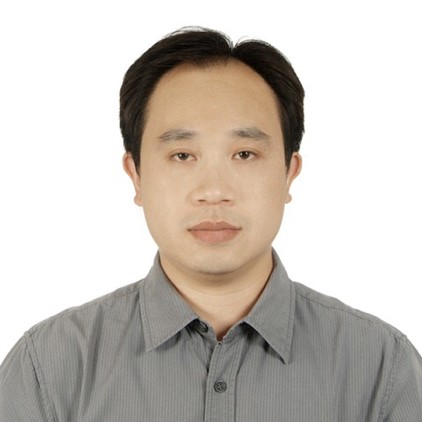
譚光明,研究員、博導(dǎo)、中科院計(jì)算技術(shù)研究所高性能計(jì)算機(jī)研究中心主任。國(guó)家杰出青年基金獲得者,參與了曙光系列高性能計(jì)算機(jī)包括曙光4000/5000/6000/7000系統(tǒng)研制。發(fā)表學(xué)術(shù)論文100余篇,包括CCF A類(lèi)論文(TC、SC、PPoPP)和Nature子刊等,曾任IEEE TPDS編委和國(guó)際會(huì)議(SC、PPoPP)等程序委員。曾獲得國(guó)家科技進(jìn)步獎(jiǎng)二等獎(jiǎng)、盧嘉錫青年人才獎(jiǎng)和全國(guó)向上向善好青年稱號(hào)。
報(bào)告題目:高性能計(jì)算性能工程
摘要: 高性能計(jì)算領(lǐng)域的核心命題是關(guān)于如何滿足應(yīng)用性能需求,與一般性計(jì)算問(wèn)題相比而言,性能通常是第一優(yōu)先級(jí)考慮的指標(biāo)。總體上而言,影響性能的諸多因素主要包括:硬件設(shè)計(jì)(流水線、向量寬度、Cache大小等)、算法模型(復(fù)雜度等)、實(shí)現(xiàn)方式(編程語(yǔ)言、數(shù)據(jù)結(jié)構(gòu)、庫(kù)的版本等)、代碼生成(編譯器)、系統(tǒng)配置(操作系統(tǒng)的選擇等)和執(zhí)行環(huán)境(親和性選擇、資源分配和系統(tǒng)噪音等)。在真實(shí)的運(yùn)行系統(tǒng)中,這些性能因素之間不是獨(dú)立正交,而是相互影響形成一個(gè)非常復(fù)雜龐大的優(yōu)化空間。在單純以軟件工程驅(qū)動(dòng)的高性能計(jì)算軟件棧設(shè)計(jì)中,人們?yōu)榱俗非蟾叩纳a(chǎn)效率,通過(guò)分層模塊設(shè)計(jì)把錯(cuò)綜復(fù)雜的性能因素“粗暴”地割裂開(kāi),在通用硬件性能提升放緩的情況下,所謂的軟件“腫脹”導(dǎo)致的性能瓶頸問(wèn)題就凸顯出來(lái)。這種性能損失對(duì)以性能為第一優(yōu)先目標(biāo)的高性能計(jì)算而言顯得尤為突出,因此,在繼高性能計(jì)算的硬件工程和軟件工程技術(shù)系統(tǒng)發(fā)展多年之后,本報(bào)告試圖提倡高性能計(jì)算性能工程的研究,以系統(tǒng)發(fā)展性能工程技術(shù),應(yīng)對(duì)高性能計(jì)算軟硬件棧在后摩爾時(shí)代的挑戰(zhàn)。
Keynote3
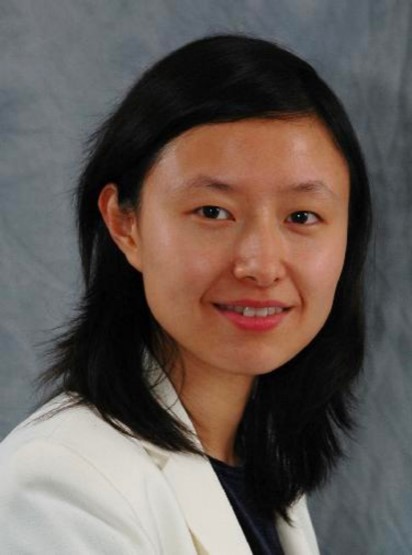
Lili Qiu is an Assistant Managing Director at Microsoft Research Asia and a Professor at Computer Science Dept. in UT Austin. She got M.S. and PhD degrees in Computer Science from Cornell University in 1999 and 2001, respectively. After graduation, she spent 2001-2004 as a researcher at System & Networking Group in Microsoft Research Redmond. She joined UT Austin in 2005, and has founded a vibrant research group working on Internet and wireless networks at UT. She is an ACM Fellow and IEEE Fellow. She also got an NSF CAREER award and Google Faculty Research Award, and best paper awards at ACM MobiSys'18 and IEEE ICNP'17. She advised a PhD dissertation that won SIGMOBILE best dissertation award in 2020.
報(bào)告題目:Acoustic Sensing and Applications
摘要: Video games, Virtual Reality (VR), Augmented Reality (AR), and Smart appliances (e.g., smart TVs and drones) all call for a new way for users to interact and control them. Motivated by this observation, we have developed a series of novel acoustic sensing technologies by transmitting specifically designed signals or using signals naturally arising from the environments. We further develop a few interesting applications on top of our motion tracking technology such as a follow-me drone and acoustic imaging on mobile phones.
Keynote4
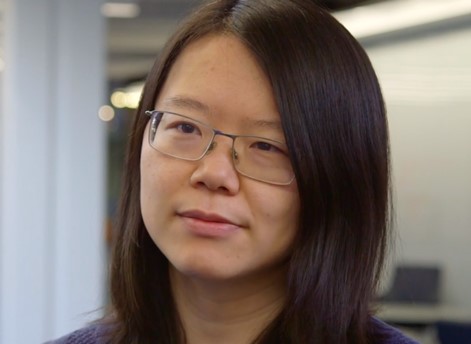
Shan Lu is a Professor in the Department of Computer Science at the University of Chicago. Her research focuses on detecting, diagnosing, and fixing functional and performance bugs in software systems. Shan is an ACM Distinguished Member (2019 class) and an Alfred P. Sloan Research Fellow (2014). Her co-authored papers have won distinguished paper and influential paper awards at ASPLOS, SOSP, OSDI, FAST, ICSE, FSE, CHI, and PLDI. Shan currently serves as the Chair of ACM-SIGOPS, and the Vice Chair of ACM SIG Governing Board Executive Committee. She served as the technical program co-chair for ASPLOS 2022, OSDI 2020, APSys 2018, and USENIX ATC 2015
報(bào)告題目: 15 Years of Learning from Mistakes in Building System Software
摘要: Bugs severely threaten the correctness and efficiency of software. With our system software growing its complexity, bugs in system software also evolve, imposing different challenges over the years. In this talk, we look back at our study of concurrency bugs in multi-threaded software, which was done 15 years ago and recently won ASPLOS Influential Paper Award, as well as various bug studies that we conducted over the years about distributed systems, industry cloud systems, database systems, machine learning systems, etc. We discuss the lessons that we have learned, as well as the new challenges faced by today's system building.
Keynote5
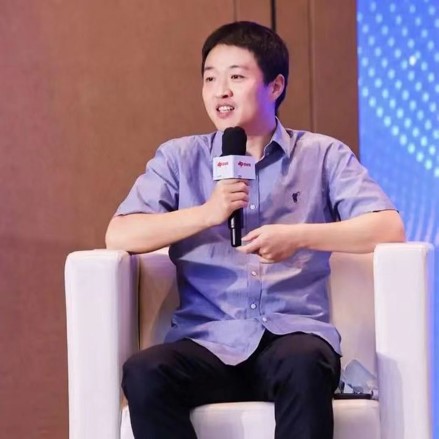
侯銳,中國(guó)科學(xué)院信息工程研究所信息安全國(guó)家重點(diǎn)實(shí)驗(yàn)室副主任、研究員、博士生導(dǎo)師,獲得國(guó)家杰青、優(yōu)青項(xiàng)目資助。長(zhǎng)期從事處理器芯片架構(gòu)設(shè)計(jì)及芯片安全等方面的研究工作。
報(bào)告題目: 處理器安全分支預(yù)測(cè)器
摘要: 在數(shù)字化日益普及的今日,數(shù)據(jù)中心處理器芯片安全問(wèn)題愈發(fā)重要。尤其是在云端,處理器面臨著眾多的安全風(fēng)險(xiǎn)。我們以處理器中性能提升關(guān)鍵模塊——分支預(yù)測(cè)器——為切入點(diǎn),分別從更新策略、內(nèi)容存儲(chǔ)、索引映射三個(gè)方面對(duì)傳統(tǒng)分支預(yù)測(cè)器設(shè)計(jì)進(jìn)行了解構(gòu),并提出了一系列安全增強(qiáng)機(jī)制,實(shí)現(xiàn)了分支預(yù)測(cè)器的安全重構(gòu)。
Keynote6
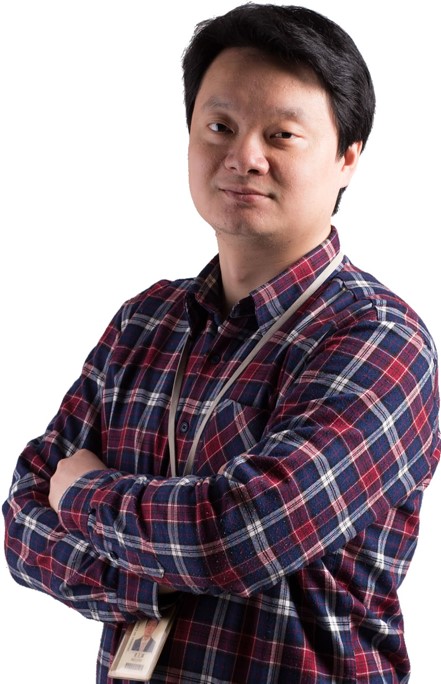
黃克驥博士,華為存儲(chǔ)領(lǐng)域8級(jí)技術(shù)專(zhuān)家,數(shù)據(jù)存儲(chǔ)產(chǎn)品線首席架構(gòu)師,負(fù)責(zé)華為存儲(chǔ)產(chǎn)品的整體架構(gòu)規(guī)劃和技術(shù)演進(jìn),是華為存儲(chǔ)產(chǎn)品競(jìng)爭(zhēng)力實(shí)現(xiàn)業(yè)界領(lǐng)先的領(lǐng)軍人物。黃克驥博士具有超過(guò)18年ICT從業(yè)經(jīng)驗(yàn)和超過(guò)15年存儲(chǔ)領(lǐng)域研究經(jīng)驗(yàn),持續(xù)深耕技術(shù)創(chuàng)新和根科技構(gòu)建,在存儲(chǔ)領(lǐng)域積累了深厚的技術(shù)功底,先后負(fù)責(zé)華為賽門(mén)鐵克云存儲(chǔ)產(chǎn)品、華為第一代分布式NAS產(chǎn)品和大數(shù)據(jù)存儲(chǔ)產(chǎn)品、融合存儲(chǔ)NAS產(chǎn)品、全閃存存儲(chǔ)產(chǎn)品、華為第一代存儲(chǔ)平臺(tái)、華為云存儲(chǔ)和數(shù)據(jù)架構(gòu)等多個(gè)產(chǎn)品及大型架構(gòu)的規(guī)劃和設(shè)計(jì),奠定了華為存儲(chǔ)產(chǎn)品競(jìng)爭(zhēng)力成為國(guó)內(nèi)第一并進(jìn)入Gartner領(lǐng)導(dǎo)者象限的堅(jiān)實(shí)基礎(chǔ)。
報(bào)告題目:基于DPU的存儲(chǔ)創(chuàng)新
摘要: 數(shù)據(jù)密集型業(yè)務(wù)的快速發(fā)展驅(qū)動(dòng)DPU成為繼CPU和GPU之后的第三大算力,業(yè)界圍繞DPU進(jìn)行創(chuàng)新也成為新的熱點(diǎn)。華為依托在存儲(chǔ)領(lǐng)域多年的技術(shù)積累,也基于DPU進(jìn)行了從硬件和OS到虛擬化、大數(shù)據(jù)、數(shù)據(jù)庫(kù)等場(chǎng)景加速的一些創(chuàng)新實(shí)踐,旨在通過(guò)DPU與存儲(chǔ)結(jié)合為用戶帶來(lái)數(shù)據(jù)處理和存儲(chǔ)效率的倍數(shù)級(jí)提升。